For UAE and GCC leaders, escaping the ai demo trap is not a model-selection exercise. It is an operating-system decision: business value, data, architecture, risk, ownership, and adoption must work as one production discipline.
Executive brief
What decision-makers need to resolve
The useful question is not whether the technology is impressive. It is whether a team can define an acceptable outcome, measure failure, protect sensitive information, integrate the result into a real workflow, and operate it at a defensible cost. In the UAE, that assessment also needs to reflect applicable sector rules, data handling obligations, Arabic and English user journeys, procurement constraints, and the organization’s risk appetite.
- Why impressive conversations hide weak systems
- test data, workflow integration, edge cases, permissions, operational ownership, reliability, and outcome metrics
- demo-to-production checklist.
Topic analysis
Turning the brief into operating requirements
Each requirement below is evaluated as part of the specific decision in this article. The aim is to leave a UAE or GCC enterprise team with evidence it can request—not a list of technology claims.
Why impressive conversations hide weak systems
For Escaping the AI Demo Trap, this matters because why impressive conversations hide weak systems. Specify the contract, identity boundary, timeout, retry, idempotency, reconciliation, and rollback behaviour. The integration is complete only when partial failure is observable and the business record remains consistent.
Evidence to request: a named owner, a baseline, a test case, an exception path, and a recorded decision for this requirement.
test data, workflow integration, edge cases, permissions, operational ownership, reliability, and outcome metrics
For Escaping the AI Demo Trap, this matters because test data, workflow integration, edge cases, permissions, operational ownership, reliability, and outcome metrics. Define representative normal, edge, multilingual, adversarial, and failure cases. Set thresholds by business consequence, preserve the evidence behind each result, and prevent aggregate accuracy from hiding critical-field failures.
Evidence to request: a named owner, a baseline, a test case, an exception path, and a recorded decision for this requirement.
demo-to-production checklist
For Escaping the AI Demo Trap, this matters because demo-to-production checklist. Translate this theme into an owner, measurable acceptance criterion, representative evidence, operational control, and a stop or escalation condition before implementation begins.
Evidence to request: a named owner, a baseline, a test case, an exception path, and a recorded decision for this requirement.
Reference architecture
Design from the controlled outcome backwards
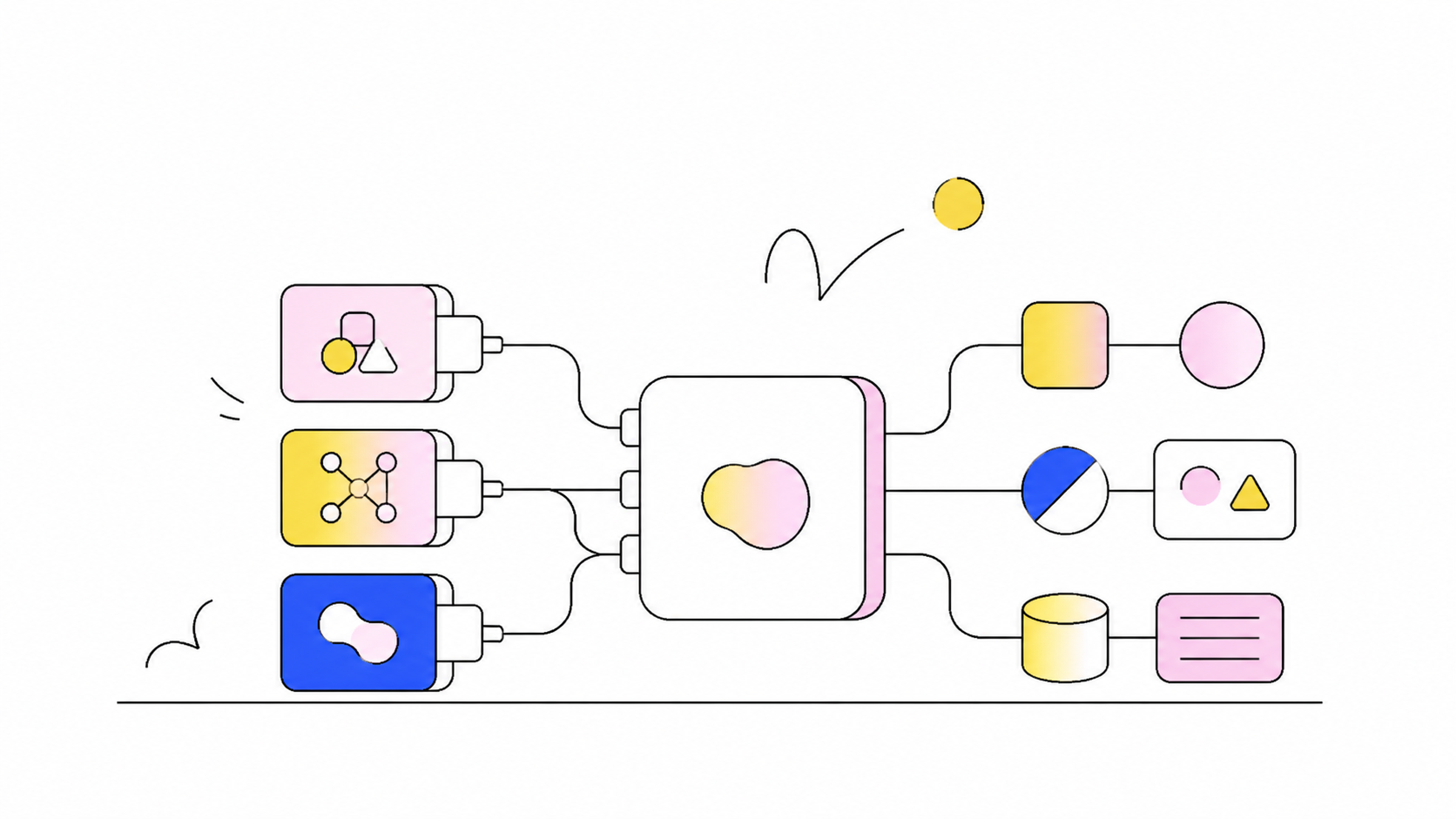
1 · Outcome contract
Define the user, decision, baseline, target, acceptable failure rate, and escalation path before choosing a model.
2 · Governed context
Classify data, enforce identity and permissions, retain provenance, and minimize the information exposed to each component.
3 · Intelligence layer
Route across models, retrieval, rules, tools, and deterministic services according to quality, latency, and cost.
4 · Operational control
Evaluate before release; observe quality, security, adoption, and unit economics; preserve rollback and human override.
Build, buy, or combine?
Buy when the workflow is standardized and differentiation is low. Build when proprietary data, a distinctive process, deep integration, or control over quality creates durable value. Most UAE enterprises should combine the two: procure commodity infrastructure and model access, while owning the evaluation data, permission model, orchestration, integrations, and operating metrics that make the system defensible.
Security, testing, cost, and operations
Treat prompts, retrieved content, model output, and tool results as untrusted data. Apply least privilege, output validation, rate and spend limits, audit trails, and adversarial tests. Maintain representative golden datasets across Arabic, English, code-switching, edge cases, and high-impact workflows. Track cost per successful outcome—not tokens alone—and make an accountable product owner responsible for quality after launch.
AI7Lab perspective
A practical 90-day path to evidence
- 01
Days 1–30 · Frame
Select one commercially meaningful workflow. Establish baseline performance, data classification, owners, failure policy, and an evaluation set.
- 02
Days 31–60 · Prove
Build the thinnest end-to-end path inside real permissions and integrations. Test normal, difficult, malicious, and Arabic/English cases.
- 03
Days 61–90 · Operate
Release to a controlled cohort. Observe outcome quality, adoption, latency, exceptions, security signals, and cost; then make the scale, revise, or stop decision.
Research and standards
This article is strategic and technical guidance, not legal advice. Confirm current requirements with qualified UAE counsel and the relevant regulator.
Share-ready takeaway
“Escaping the AI Demo Trap: the durable advantage comes from turning why impressive conversations hide weak systems into a measurable, governed workflow—not from the model or demo alone.”